Tribal Libraries

The TLAM class recently learned a lot more about the development of tribal libraries in the United States by reading about Lotsee Patterson’s work that began in the 1970s1. With partners like Charles Townley and the support of the Bureau of Indian Affairs, Patterson helped to make Native-run libraries on tribal lands become a reality. She also helped to found the American Indian Library Association.

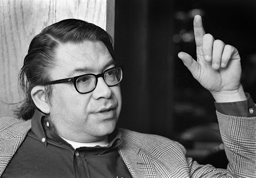
“It was an exciting time to be in library school,” Janice Rice, senior academic librarian at the University of Wisconsin-Madison’s College Library, shared with the class during her recent visit.

Janice Rice

One can easily see Janice’s admiration for the work Patterson and her peers accomplished to set up libraries across the U.S. During this time Janice, a member of the Ho-Chunk Nation, had been pursuing a master’s degree in library science. Since then, Janice has also been involved in the American Indian Library Association, and like Patterson was at one time president of the association.

For the class, Janice briefly traced the history of American Indian libraries:

  • Boarding schools era: an example was given about American Indian students maintaining and using libraries in residence halls at the Indian boarding school in Carlisle, Pa.
  • 1970s: tribal libraries were created across the U.S. to meet the information needs of tribes and because of Patterson’s efforts
  • 1980s: tribal college libraries were created for college accreditation

Janice explained how tribes, when planning their libraries, try to make their libraries relevant to their communities. The focus is on what’s most important to the tribe as a community, not the individual. And to look forward and think of future generations and their needs. Therefore, tribal libraries are integral to its communities once they’ve been planned and established. We see this evidence in the many roles a tribal library may play today: a public library, a tribal college library, a tribal archive, and/or a school library partner.

Connecting with other tribal libraries and librarians is an important part to building a tribal library community. It is from each other that we may discuss and build on best practices as it relates to our communities. There are tribal college librarian gatherings, Janice shared, and professional organizations like the aforementioned American Indian Library Association (http://ailanet.org). The AILA may be especially important to tribal libraries with limited budgets because members, for a small annual fee, may access a multitude of resources.

Janice concluded her visit with our class by providing a few interesting resources to the class to learn more about Native peoples and Tribal Libraries. These resources are listed below:

Tribal Libraries, a Selected Bibliography:

Midwest Alliance of Sovereign Tribes: http://m-a-s-t.org/

Map of U.S. Federal and State Indian Reservations: http://infoplease.com/images/indian9.gif

Other resources mentioned above include:
American Indian Library Association (http://ailanet.org)

-Mee Xiong

1Biggs, Bonnie. (2000). Bright Child of Oklahoma: Lotsee Patterson and the Development of America’s Tribal Libraries. American Indian Culture & Research Journal, 24(4), 55-67.

Starting and Continuing Community Partnerships: Updates and Reflections

One of the themes we’ve discussed in TLAM is the importance of having shared goals[i]. Students and tribal partners should both benefit from working together. As “mutual learners,” it’s important to approach each project with an open heart and mind and only move forward with ideas that benefit us all. Moreover, by establishing trust, we help ensure sustainability.

At this point in the semester, we’ve finally all had a chance to put into practice a few of the concepts we’ve talked about in class. Each TLAM service-learning group has had an opportunity to meet its community partner and begin to move forward with their semester plans. So here’s a brief roundup of the group projects, submitted by Robin Amado, Katelyn Martens, and me, Lotus Norton-Wisla. Keep checking back over the semester to see our progress!

Red Cliff Service-Learning Project (Robin Amado)

The Red Cliff group embarked on an overnight trip February 21 ­through February 22. Visiting the new Lac du Flambeau dental clinic, that incorporates clan imagery and natural materials,[ii] we also stopped by Northland College to hear three storytellers: Joe Rose, Sr. (Bad River Ojibwe), Diane Bear Defoe (Red Cliff Ojibwe), and Jim Northrup (Fond du Lac Ojibwe). It included traditional, contemporary, and historical stories.

On Friday, meeting with library board at the Early Childhood Center, we discussed lots of business, including the Ginanda Gikendaamin logo, promotional videos, building plan, grant opportunities and website content. Together, we came up with a great plan for the semester.

Oh, and by the way, there was a blizzard that forced us to stay hunkered down at the Legendary Waters casino for most of Friday. But it wasn’t too bad. 3 of 5 came away from the slots ahead!

Oneida Nation Film Preservation Project (Lotus)

Our group’s goal is to help the Oneida Nation organize and preserve their large film collection.

To do that, we’ll identify film that is relevant to the tribe and enter all technical, descriptive, and condition information that we can identify into a spreadsheet that will be accessible by everyone involved in the project.

We had our first meeting (and workshop) on Tuesday, February 26th. We met for lunch with Loretta Metoxen and Reggie Doxtater from the Oneida Nation Cultural Heritage Department, Katie Mullen from the Wisconsin Historical Society, and Mary Huelsbeck of the Wisconsin Center for Film and Theater Research (WCFTR). We chatted about our mutual interests in archives and history, learned a little bit about each other, and, finally, about the dozens of film reels we’ll be working on over the semester.


At WCFTR, Mary taught us all about different kinds of film, common preservation problems, how to wind and unwind film onto a core, and how to use the Steenbeck machines to view film. We viewed a few different reels from the 1960s-70s, including interviews with tribal members, a dramatization of leaving for Indian boarding schools, and footage of a collapsed building.

Loretta identified several people and places quickly as we were watching the films, which made us realize that we will have to figure out a way to take pictures to send to her for identification.  Her knowledge of the tribe (people, places, events, traditions) will add so much more meaning to the descriptions of film. While we’ll be reading up on Oneida history, we’ll definitely collaborate with Loretta and Reggie to get the most complete descriptions possible of the film.

We’re all excited to get into some reels of film this week! We’ve got plans to work on the film identification every week through the rest of the semester.

It was wonderful to meet Loretta and Reggie, discuss goals for the project, and learn the skills we’ll need to get started on this film preservation project. We’re also looking forward to visiting the Oneida nation sometime in April!


Ho-Chunk Learning Center Project (Katelyn Martens)

Our group visited the Ho-Chunk House of Wellness last Wednesday (2/27). The group was excited to finally meet the staff and discuss the center’s goals. Since other previous TLAM classes have been working with the center, we weren’t quite sure about our role. Coming back from the trip, we knew the best places to put our effort––and we’ve got lots of ideas on how to accomplish it. The main goal is to develop a kid-friendly and easy to use children’s library.

Here are few of the main topics we discussed with the Learning Center staff:

Collection development:

  • Obtain more books for the library
  • Make an Amazon wish list and direct people there if they are interested in purchasing books, magazines, and other materials.
  • Prioritize purchasing Accelerated Reader and Native American literature books

Instruction:

  • Teach the Ho-Chunk Youth Council how to use library thing, basic shelving practices, and basic organization practices in order for them to take ownership of the library collection and help manage the high rate of staff turnover.

Organization:

  • Tag the books within LibraryThing with their AR numbers to help teachers choose books for students.
  • Make a checkout procedure in order for students to be able to bring books home.
  • Create a storytime area in one section of the Learning Center and find better shelving to accommodate the books

We plan to visit frequently, learn more about Ho-Chunk culture, and––alongside the Wellness Center staff and students––familiarize ourselves with LibraryThing.


So all of the groups have gotten off to a great start by meeting tribal partners, sharing goals, engaging in discussion, and learning! Thanks to Robin and Katelyn for their notes and pictures!

-Lotus Norton-Wisla


[i] Walk Softly and Listen Carefully: Building Research Relationships with Tribal Communities (p. 19) http://cnhp.montana.edu/NCAI-WalkSoftly.pdf

[ii] Link to the Wisconsin State Journal article about the construction of the Lac du Flambeau clinic: http://host.madison.com/news/local/on-wisconsin-new-clinic-will-transform-dental-care-in-north/article_c80c78a8-6d63-11e2-a69c-0019bb2963f4.html


Indigenous Knowledge & Children’s Literature*

Think about the types of children’s books you grew up reading. Were American Indians present? What did you learn about them? Was it factual or a misrepresentation? How did you know?

On Thursday, TLAM had the pleasure of chatting with Debbie Reese, a respected educator who is tribally enrolled at Nambe Pueblo in northern New Mexico. Debbie is an advocate for authentic American Indian children’s literature, which led her to launch the American Indians in Children’s Literature (AICL) blog in 2006. Through AICL, she challenges the all-too-common misrepresentation of American Indians in children’s literature and helps educators, librarians, and the general public find good materials.

While Debbie shared her thoughts on sovereignty, sacred spaces, and politics, it was the issue of authenticity that I connected with the most. As a future school librarian, my goal is to have a well-balanced collection with titles that give students accurate, authentic representations of American Indian communities. To do that, though, especially with limited budgets, it’s essential that we all seek out reviews from respected, knowledgeable sources. AICL is a great place to start!

It’s especially important because, as Debbie noted, many books harbor “micro aggressions,” stereotypes that the majority culture may not even acknowledge but harm others. Clifford’s Halloween by Norman Bridwell (1986) is an example. Not only does Clifford wear a large headdress of feathers, he appears to be smoking a “peace pipe” and wears a serious expression. This image conveys many stereotypes to children, including that “Indians” are something to dress up as rather than people living in contemporary societies, working at contemporary professions, and living amongst the general American public.

It’s through librarian and educators in alliance with American Indian communities that we can present contemporary images, truthful histories, and well-researched stories to our young people. I’ll make a concerted effort to align my book choices with her suggestions.

Thank you, Debbie, for taking the time to share your knowledge with us!

-Katelyn Martens

Debbie’s recommendations on what to look for in children’s literature:

  • Books giving information in contemporary society
  • Tribally specific texts
  • Books affirming American Indian cultures – these must be well researched

She suggests that librarians and educators should:

  • Know at least one nation in-depth through reading and research
  • Visit tribal websites with children in order to learn about their everyday lives
  • Speak up for great children’s books so they stay in print
  • Speak out on problematic texts in order to promote better alternatives

*Disclaimer: All personal opinions are my own and do not represent all members of the TLAM class, TLAM student group, Debbie Reese, or other affiliated parties.

Native (Domestic Dependent?) Nations

“Political sovereignty and cultural sovereignty are inextricably linked, because the ultimate goal of political sovereignty is protecting…a way of life.”
-Richard West*

Over 180 years ago, John Marshall, a U.S. Supreme Court Chief Justice, declared that Indian tribes were not foreign nations, but were instead “dependent domestic nations.” Since the ink dried on that historic opinion, the scope of tribal political sovereignty has been contested in courts throughout the country.

With the guidance of Larry Nesper, a UW-Madison Associate Professor of Anthropology and American Indian Studies, this week TLAM explored the sometimes confounding history of federal Indian law. From the “Marshall Trilogy” to the Major Crimes Act that deprived tribes of the ability to address crimes committed again their own people on their own lands, it can be (as one one of our readings put it) completely byzantine–even for me, an attorney!

But political sovereignty isn’t the only kind. Although there’s no simple, one-sentence definition for cultural sovereignty, my sense is that it involves the notion of inherent sovereignty. Tribes are not sovereign because the U.S. government conferred sovereignty to them; instead, their sovereignty emerges from land, culture, and community–from things like language and stories (which we discussed last week) that necessarily predate colonization.

I’m also happy to say that those of us working with the Ho-Chunk House of Wellness may have an opportunity to help support some of those traditions with an upcoming grant proposal. If successful, the group hopes to use part of the award for cultural programming and to increase the Learning Center’s collection of Native materials.

Keep your fingers crossed!

Finally, we are in full-on training mode to better assist with the ongoing children’s collection cataloging and labeling project. Many of us attended a workshop taught by TLAM student group member Phillip Yocham on the use of Library Thing, a free web application used to catalog books in the collection. And, despite printer malfunctions and some office supply snafus, nearly 40 more titles were labeled. We hope to deliver them later this month!

-Megan Rosborough

*Quoted in Native Nations and Museums: Developing an Institutional Framework for Cultural Sovereignty by Rebecca Tsosie. http://www.tulsalawreview.com/wp-content/uploads/2010/10/Tsosie.Final_.pdf

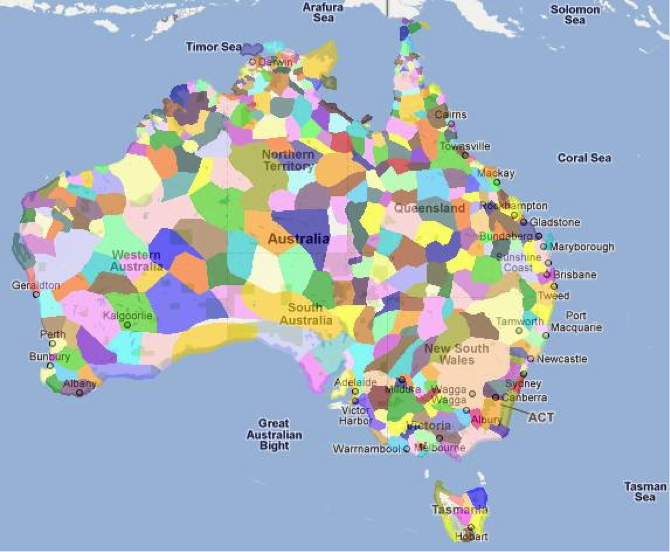
And here’s a larger version of the map: http://www.education.wisc.edu/images/student-diversity-programs/aics-lesson1-americanindiansmapcensusbureau.gif

This Will Be My Strength: Language and Storytelling

This week in TLAM, we bought our good friend Rand Valentine back to present and to join our discussion about native languages, revitalization and education programs, and the oral storytelling tradition.

There’s a quip about language popularized by Max Weinreich: a language is just a dialect with an army and a navy behind it.  That is to say, there really is no inherent difference between a dialect and a language, except a difference in social and political power associated with them.  We more or less arbitrarily assign the terms ‘language’ or ‘dialect’ to communication systems based on politics, power, geography, and perceived worth rather than an actual linguistic difference.  When we talk about indigenous languages, this little joke takes on serious overtones; the current endangered state of many native languages and dialects is just a symptom of the greater social and political disenfranchisement of native peoples.

We learned that at the time of European contact, about 500 native languages were spoken in North America.  Today, the number is below 200.  This loss of language is directly tied to government policies that attempted to integrate indigenous peoples into Western society.  The boarding school experience, where generations of native youth were taken from their families, constituted an an assault on culture beginning by stripping children of their language.  By removing their ability to communicate in their own language, children at boarding schools were unable to communicate shared ideas, values, and beliefs with each other, effectively isolating them unless they adopted western language, dress, and behavior.

Today, the boarding school era is over, but its ramifications are still felt across the country; people who have lost the ability to speak and understand their traditional languages have lost an important part of connecting to their community and their past.  Language revitalization efforts are underway, but many lack sufficient materials or funding.  Rand pointed out that even in communities with a healthy number of speakers, it is difficult to locate sufficient written native-language materials to provide opportunities to improve language skills, train teachers, or develop language immersion school curricula.

We talked about the headway that is being made.  The hard work of dedicated individuals and groups has brought many of these languages back to life, making them living, breathing things once more.  Immersion schools like Waadookodaading [http://www.waadookodaading.org/] serve as success stories, with stellar student performance on standardized English tests.

We also discussed our role as information professionals in this landscape.  Information and culture agencies have a great opportunity to affect change and support speakers of indigenous languages that they serve.  These institutions have a responsibility to make materials about or written in native languages as accessible as possible; with the availability of modern and historical written materials come possibilities for improved language revitalization programs that combine traditional oral modes with the western textual tradition.

Libraries, archives, and museums can and must move beyond the simple curatorship of native language materials, though.  These agencies are in the unique position to use these materials to create relationships and foster understanding in their non-native patron base and to create a system of care and access that is respectful and sensitive to native ways of telling and knowing.  Perhaps most importantly – and this is also perhaps the greatest challenge – libraries, archives, and museums, are in a position to present ways of knowing and telling very different than the textual, ‘objective,’ western norm and to challenge assumptions of what counts as a legitimate way to share and take in knowledge.

-Sarah McDole

Miranda Johnson and Biculturalism in Aotearoa/New Zealand

At the end of our semester studying indigenous information issues, the TLAM class welcomed guest lecturer, Miranda Johnson to speak to us about Maori activism and biculturalism in New Zealand.

Johnson is Assistant Professor in the departments of History and American Indian Studies at UW Madison. Her research interests focus on Indigenous history and policy, especially in New Zealand.

Like all guest speakers we’ve heard from, Miranda Johnson managed the impressive feat of relating years of history and policy within a very limited amount of time. In the hour we had with her, we discussed:

  • Maori activism in the 1960’s and 70’s for land and language
  • The role of the Treaty of Waitangi (link to Wikipedia: http://en.wikipedia.org/wiki/Treaty_of_Waitangi)
  • Scholarly influences upon Maori activism: Ruth Ross
  • Establishing biculturalism and bilingualism in the 1980’s

Throughout our discussion with Johnson, we were able to make connections with what we have been studying about and experiencing of Native American issues relating to information, language, and activism. It was enlightening to see how 1960’s and 70’s American Indian activism in the US inspired, and in turn was inspired by Maori activism in New Zealand.

We also saw other similar issues relating to land and language loss and continuing debates about Native sovereignty. Differences between the two countries’ native populations were striking as well. In a smaller country where the indigenous population speaks the same native language, biculturalism has taken great strides. It is especially inspiring to see the effects of language revitalization and the role that libraries have played in this.

In our discussion with Miranda Johnson, we also learned that despite the strides taken in the 1980’s and ‘90’s, there is still political pushback against this ideal of biculturalism. She also raised the point of how biculturalism should not take the place of multiculturalism as New Zealand sees greater immigration from other countries.

The TLAM class thanks Professor Johnson for providing us with this global scope of indigenous activism, how it relates to libraries and information issues, and what we can do as librarians and cultural heritage professionals to best serve indigenous people and communities.

Articles by Miranda Johnson:

2008 ‘Making History Public: Indigenous Claims to Settler States,’ Public Culture 20.1:    97-117

2005 ‘Honest Acts and Dangerous Supplements: Indigenous Oral History and Historical Practice in Settler Societies,’ Postcolonial Studies, 8, 3: 261-76

2005 ‘ “The Land of the Wrong White Crowd”: anti-racist organizations and Pakeha
identity politics in the 1970s,’ New Zealand Journal of History, 39, 2: 137-57

2000 ‘Chinese Civil Society: a case of failure or scholarly obfuscation?’
New Zealand Journal of Asian Studies
, II, 2: 107-35

Further Reading about Maori Libraries:

Te Ara Tika: Maori and Libraries in New Zealand – Staying the Distance. Szekely, C.       (2002). World Libraries 12(1).

Baraboo Group Labeling Party

Purpose: To label books previously brought back from trips to Baraboo.

Date: April 15, 2012

Participants: Kelly Kraemer, Travis Mueller, Rachael Page, Peter Rudrud, Dorothy Terry, and Phillip Yocham

From our previous visits to Baraboo, we’d brought back five or six boxes of books. The majority of the books were fiction. This was a chance to label the books so they could be returned to the center.

Over spring break, Phillip and Travis had prepared labels for the fiction. These labels have the first three letters of the author’s name, and provide a way to organize the substantial fiction collection. Fiction books also receive a colored sticker designating them as children’s fiction (for grades K-5 generally) or teen fiction (6-12).

With six people we were able to divide up the work. Jobs included: applying the author label; checking the book against our lists to make sure it was properly classed and recorded; applying the colored sticker and label cover; troubleshooting, checking LibraryThing for items not on the list, or adjusting tags for items that were improperly cataloged.

The work went well and we are happy to have this taken care of. Unfortunately, because of end of semester busyness, we are unlikely to do more labeling until sometime in May, after classes are finished. Our next scheduled visits are May 14th and 17th, when we will give a presentation to the students about our organization scheme for the library.

- Travis

New Perspectives on Archives

Can you imagine writing a paper with over 20 other people? What would you write about?

Michelle Caswell co-authored such a paper, titled “Educating for the Archival Multiverse.” In March, she gave a guest lecture to the TLAM class on issues related to this paper.

The “multiverse” in the title refers to the concept of various possible universes; in this case universes of thought and perception that make up the worldviews of different people and different cultures. Caswell and her compatriots feel that current archival practice and the education that feeds into it is dominated solely by a Western cultural perspective.The worldviews of other cultures, and particularly native cultures, are not reflected in archives.

Caswell explained that possible solutions to this issue can be found in the closely related concepts of pluralism and social justice.

Archival pluralism requires practitioners to first recognize the varying perspectives of different cultures and communities, and how the default system of archives may disenfranchise them. Building relationships with communities and collaborating with them can help to overcome these issues. Pluralism encourages multidisciplinary approaches to knowledge, and exploring different perspectives

Social justice is the promotion of a more equitable distribution of resources within society. It also promotes the idea that various peoples should be able to express and define themselves in their own ways, and not have to be defined by others; obviously, this is closely related to pluralism. Emphasizing social justice as a goal challenges the predominant view of archivists as impartial custodians of cultural material. While archivists may be well intentioned, current archival practice perpetuates a single cultural perspective and the associated power structures.

Although the focus of the paper and the lecture was on archives, it is obvious that other cultural institutions, like libraries and museums, could benefit from similar considerations.

And of course, it is not just Caswell and her coauthors who are working towards these changes. A similar philosophy can be seen in Mukurtu (pronounced MOOK-oo-too). This is a platform for digital archives created in collaboration with the Warumungu Aborigines of Australia. The system limits access to certain material in accordance with cultural protocols and authority. It is open source and available for use by other communities. More information can be found at: http://www.mukurtu.org/

-Travis Mueller

Indigenous Classification

Perhaps it is distance itself,
That causes our voices,
To be lost,
From the margins.

It seems we are invisible too,
Out here in the distance,
As we flicker at the margins,
Of time.

- from “Margins” by John D. Berry, California, 2003

In a group breakout discussion on March 22nd, 2012, TLAM students talked about the possibilities in which tribal librarians and advocates can bring the voices of their communities forward. Traditional, mainstream Eurocentric cataloging systems, such as the Dewey Decimal System and Library of Congress, have long consigned indigenous knowledge to the margins. A classmate noted cultural bias in the typical shelving of Native American literature under the “History” section of local libraries. Top-down classification systems like the Dewey Decimal System perpetuate “ghetto-izing” Native cultures by relegating their existence to the past as Holly Tomren describes in “Classification, Bias and American Indian Materials.”

However, since the 1970s, tribal librarians and advocates have been creating innovative, community-centered and culturally appropriate systems to organize their resources.

To promote a Native classification scheme, TLAM students considered the following ideas proposed by researchers/librarians such as UW-Milwaukee Professor Hope A. Olsen and Brian Deer:

1. Organization versus Classification

According to Olson, the concept of organization is appropriate to indigenous classification because it “suggests an organic whole made up of connected parts” (Tomren 10). Traditional classification, on the other hand, emphasizes arrangement of information as individual entities.

2. Using Unbiased Subject Headings/Terms

Olson talks about the need for librarians to be aware and eliminate derogatory terms used by Library of Congress that further marginalize communities of color, women and the disabled.

3. Creating Knowledge Organization Reflecting Indigenous Worldview

Libraries need to understand that the Western worldview, which emphasizes hierarchy, linearity and individuality cannot be applied to the organization of non-Western knowledge. Native cultures, in particular, value relationships, holistic concepts and balance. In addition, indigenous cultures are diverse and should not be treated as a monolithic entity as they have been since the beginnings of American colonization. The Brian Deer Classification system is an example of a classification scheme that reflects a First Nation’s perspective and was developed in the 1970s.

Inspired by these ideas and those from David Weinberger’s book on cataloging in the Digital Age Everything is Miscellaneous, students also presented the following steps towards improving current cataloging protocols in various library settings:

  • Consult with members of indigenous communities on creating appropriate knowledge organization systems.
  • Encourage user/patron participation in creating subject terms and/or tag information (organized online) themselves.

By engaging in conversations about issues in tribal librarianship such as indigenous classification, students of TLAM are learning how to apply values of democracy, equality and cultural sensitivity not only in tribal libraries, but in all libraries.  Discussions like these provide us with rich background knowledge that fosters our abilities to collaborate with tribal librarians and community organizations with a better understanding.  Most importantly, we are gaining insights and new ideas to replace traditional, oppressive cataloging systems with ones that are inclusive, liberating and accessible to users of all backgrounds.

Readings on Indigenous Classification:

-Dawn Wing

Third Baraboo Trip – Making Progress!

Purpose of Trip:  To transport a book cart for the center, to start labeling the books, and to bring back some of the fiction books for processing.

Date:  March 28th , 2012

TLAM Members:  Irene Hansen, Travis Mueller, Rachael Page, Peter Rudrud, Dorothy Terry, and Phillip Yocham

After hours of discussion, coordination, selecting and ordering, the Baraboo Group reached an important stage in our project with today’s visit. The labeling has begun!

We were able to get started on labeling books in the collection and enjoyed the camaraderie and successful feelings of being underway.

Rachel, Irene and Phillip were also able pick up a donated library cart from DPI and we brought it with us and delivered it to the Learning Center. We brought three boxes of mostly fiction books back with us to Madison and will discuss a time to get together and label those. This may prove to be an opportunity for other TLAM group members to get involved with our project without having to travel to Baraboo.

Our next trip to is scheduled for April 13th after Spring Break.

- Peter Rudrud